This is a demo. The collector is made up. Every card in it is a real graded slab read off the public Solana blockchain, with its real photo, grade and cert, and every price is one we actually found, linked to where we found it. Nothing to sign up for; click around.
Kumori Lab · cardstock · live demo
What if your cards were a portfolio you could trust?
cardstock turns a card collection into an investor's view: value, cost, return, what moved and when. The difference is that it never asks you to take a number on faith. Every price comes with the places it was found, and the ones that didn't fit the card are shown, crossed out, with the reason.

Why it might be your kind of thing
- Card people. Your CollX or Card Ladder export becomes positions, with value lines over every export you've made and the cards that moved. Card values are famously untrustworthy, mostly because graded sales leak into raw values; here a raw card never borrows a slab's price, and every price is linked so you can judge it.
- On-chain people. Graded slabs are vaulted and tokenized on Solana (Collector Crypt, Phygitals). cardstock reads them straight off the chain, photos, grades and certs included, and matches your cards to the tokenized copies out there.
- Crypto people. Those tokens trade. Every night it compares on-chain asks with what the same card and grade go for elsewhere, flags the gaps, and keeps a public score of whether each gap held 30 and 90 days later. It flags; it doesn't advise.
A two-minute tour
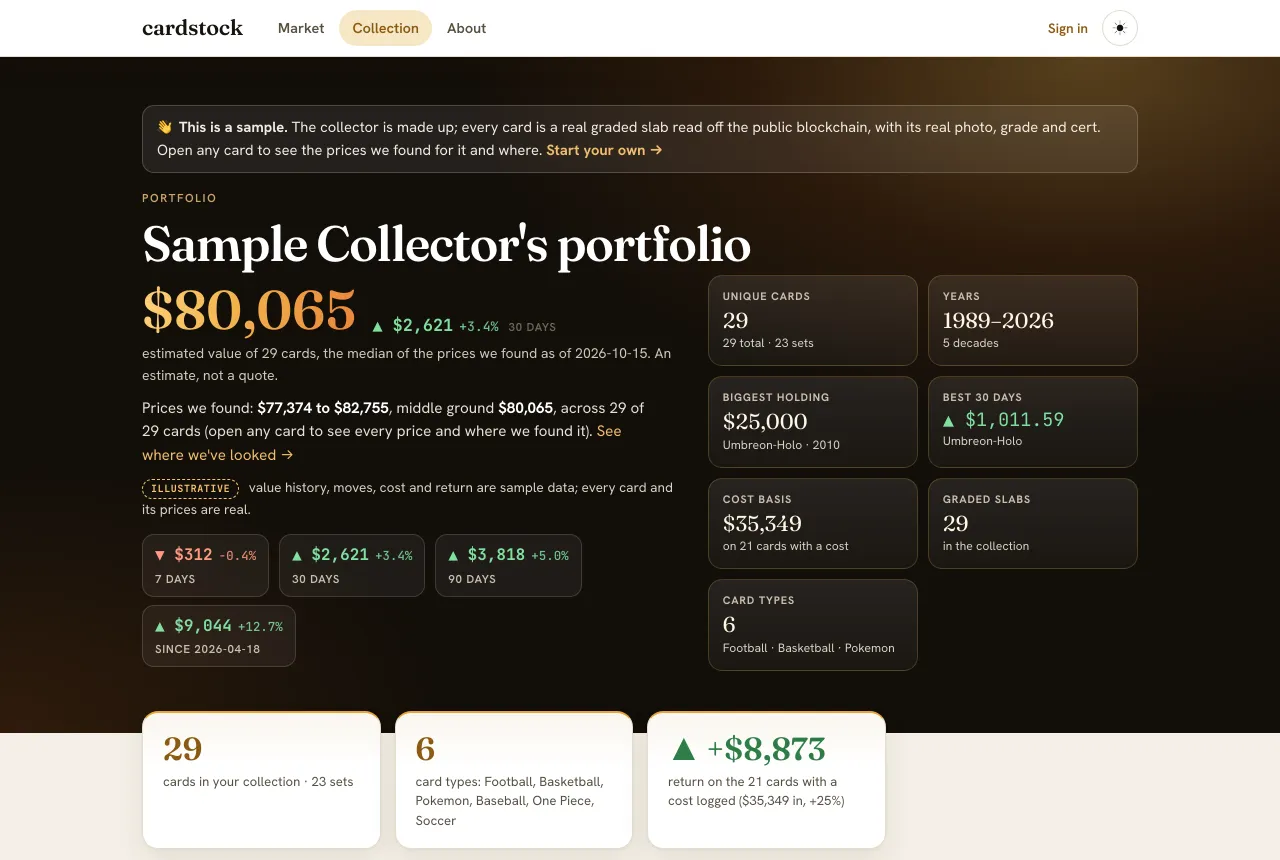 The portfolio →Value, the honest range across every source, cost and return, and a grid of what the collection is made of.
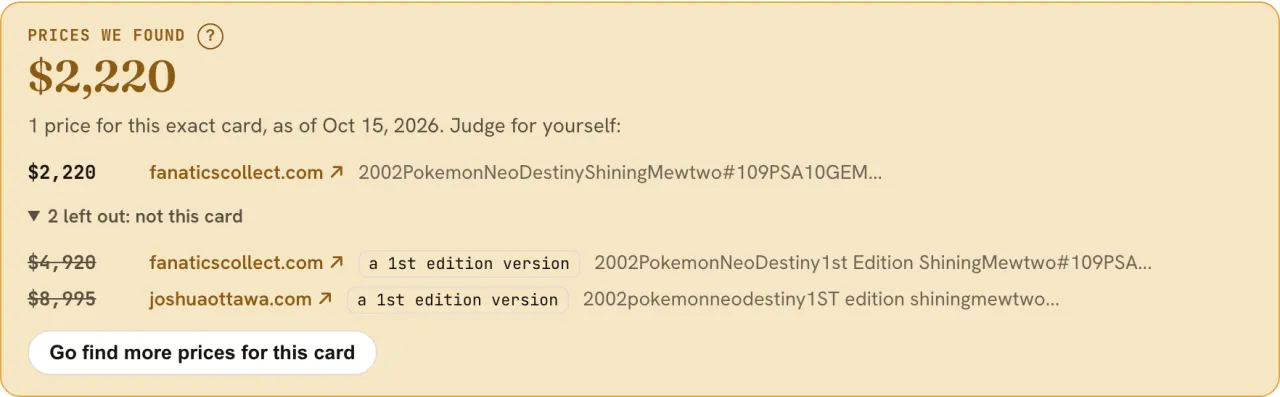 One card, every price →A 2002 Shining Mewtwo PSA 10: the one price that fits, and two 1st Edition prices left out, with why.
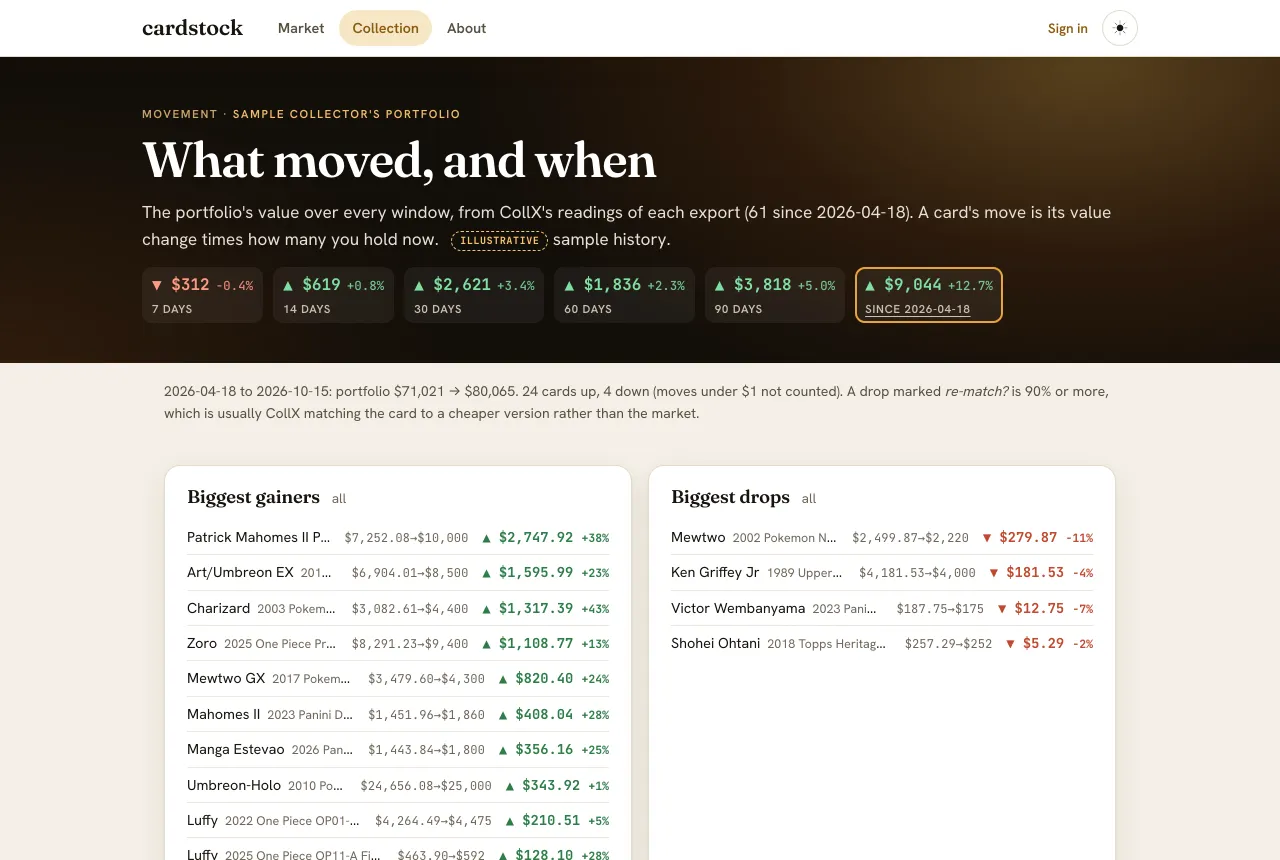 What moved, and when →Every window from 7 days to all-time, the biggest gainers and drops, the strongest and weakest set.
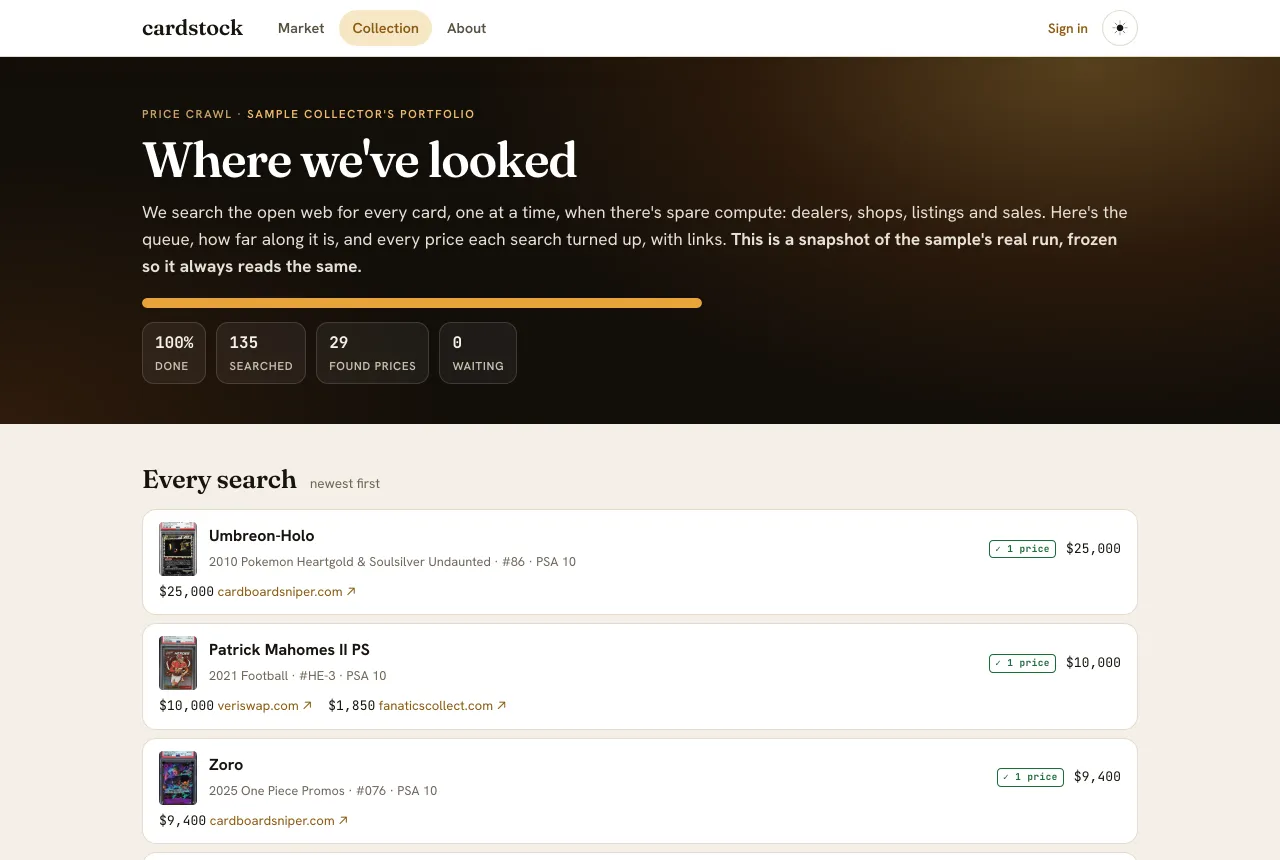 Where we looked →The crawl that does the legwork, card by card, with every search and what it turned up.
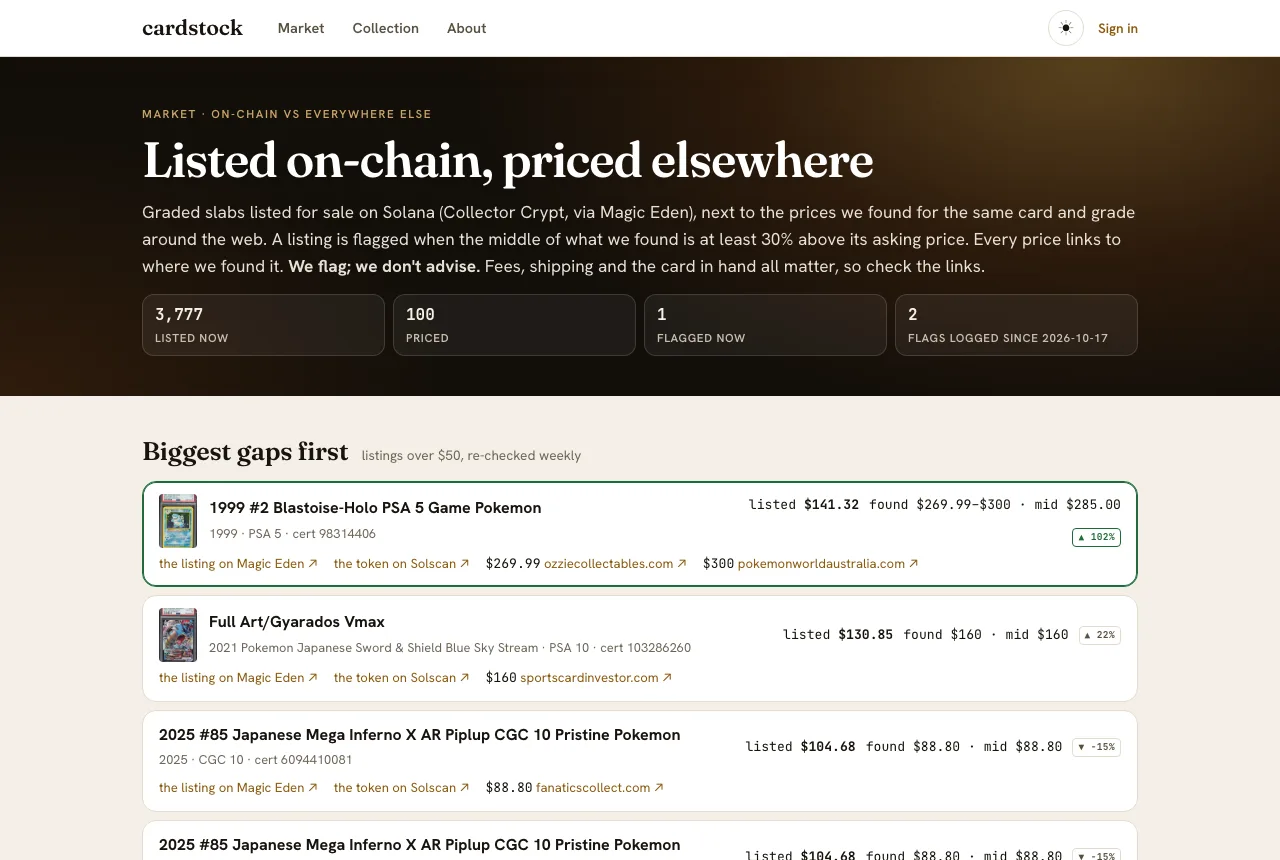 On-chain vs everywhere else →Listings on Solana next to the same card and grade around the web, and the paper-trade record of the gaps.
The demo's value history is illustrative and labeled so (a made-up collector has no months of exports); its cards and prices are real. A real portfolio, built from someone's own exports, has its real history.
cardstock is a Kumori Lab experiment, built in the open on free tools. Nothing here is financial advice.